Adapting Traditional Call Bet Structures for Multi-Platform Roulette Participation and Probability Oversight
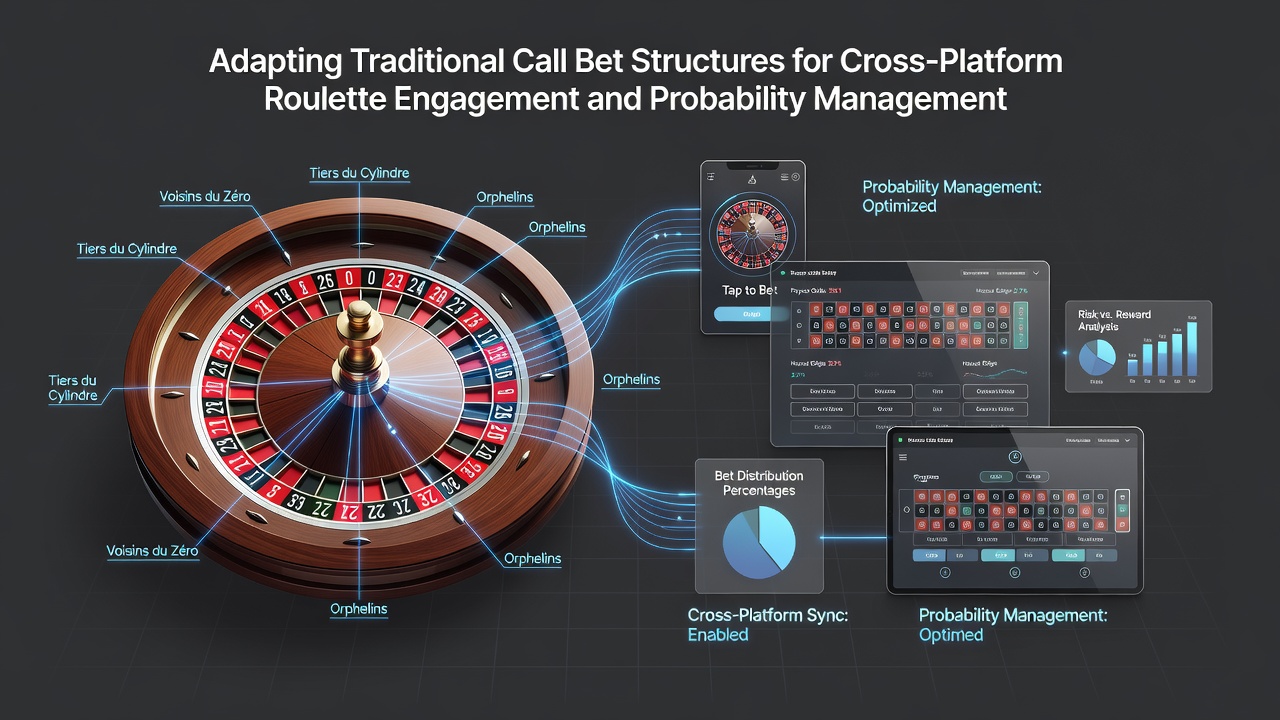
Traditional call bets such as Voisins du Zéro, Tiers du Cylindre, and Orphelins originated on physical European and French roulette wheels where players announce wagers covering specific number clusters around the layout. These structures rely on fixed groupings that deliver consistent payout ratios and house edge calculations based on 37 pockets. Observers note that the same groupings translate directly into digital environments yet require adjustments when players switch between mobile apps, desktop browsers, and live dealer streams because interface differences affect bet placement speed and confirmation timing.
Core Mechanics of Call Bets in Standard Play
Call bets divide the wheel into sectors that share common neighbors, allowing one verbal or digital instruction to cover multiple chips at once. Voisins covers 17 numbers centered on zero with nine chips, Tiers spans 12 numbers opposite zero using six chips, and Orphelins fills the remaining eight numbers with five chips. Data from wheel probability tables shows each sector maintains the standard 2.7 percent house edge on single-zero variants. Researchers at the University of Nevada Reno documented these ratios in a 2024 probability study that remains applicable across formats because the underlying wheel physics do not change when the game moves online.
Cross-Platform Synchronization Requirements
Platforms that offer synchronized play must map each sector to touch targets or mouse coordinates that remain identical regardless of screen size. Mobile interfaces often compress the betting grid, which can shift finger placement accuracy by several pixels and increase the chance of selecting an adjacent sector by mistake. Desktop versions provide larger click areas yet may introduce latency when the player toggles between multiple browser tabs. Live dealer feeds add another layer because the wheel spin occurs in real time while the betting interface runs on a separate server, creating a brief window where announced bets must register before the croupier closes the table. As of June 2026 several operators have introduced unified APIs that lock sector coordinates server-side so the same call bet executes identically whether the session begins on a phone during commute or continues on a laptop at home.
Probability Management Tools Across Devices
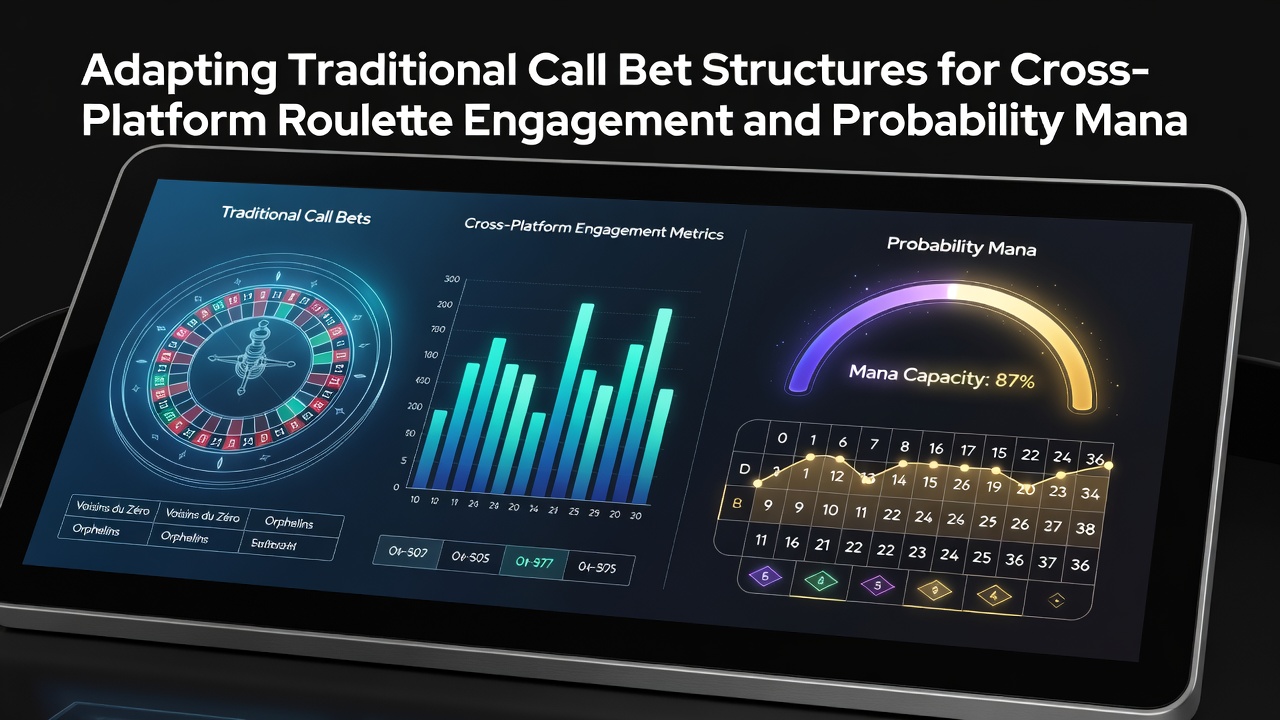
Effective oversight starts with displaying running totals for each sector in real time rather than forcing players to recalculate chip values manually after every spin. Software layers now attach probability meters that update after each outcome using historical wheel data from the current session. These meters show the frequency of Voisins hits versus expected distribution without altering the random number generator itself. Industry reports from the European Gaming and Betting Association indicate that such visual aids reduce average bet variance by highlighting when a sector deviates from its mathematical distribution over extended play periods.
Implementation Examples from Current Operators
One major platform rolled out a cross-device call bet preset system in early 2025 that stores user-defined sector combinations in cloud profiles. A player who configures an Orphelins-heavy layout on desktop sees the identical preset appear instantly on the mobile app with chip denominations scaled automatically to the available balance. Another operator introduced a latency compensation buffer that holds announced bets for an extra 200 milliseconds on live streams, allowing the call to register even when network conditions fluctuate between 4G and Wi-Fi handoffs. Both approaches preserve teh original payout structure while addressing the practical differences in how devices capture and transmit player input.
Regulatory and Technical Considerations
Jurisdictions outside the United Kingdom maintain separate testing standards for RNG integrity and interface fairness. Canadian provincial regulators require explicit confirmation screens for any multi-chip call bet to prevent accidental over-commitment on smaller screens. Australian state authorities focus on session time reminders that appear whenever a player activates multiple call bets in quick succession. These rules do not alter the mathematical probabilities yet they shape how platforms present the same traditional structures to users across regions.
Conclusion
Call bet frameworks retain their core probability characteristics when transferred to digital and live environments provided operators maintain consistent sector mapping and real-time feedback mechanisms. The adaptations introduced through synchronized APIs, cloud presets, and latency buffers demonstrate how established groupings continue to function across device types without modification to payout ratios or house edges. Ongoing technical refinements focus on preserving the original strategic intent while accommodating the varied input methods and connection profiles that players encounter in 2026.