
Bonus Clearance Battlefield: Roulette Bets' Uneven Wagering Contributions and Player Pathways
Understanding Bonus Wagering Requirements in Online Roulette
Online casinos often lure players with bonuses that promise extra funds for roulette sessions, yet those offers come packed with wagering requirements—demands that players bet a multiple of the bonus amount before withdrawing winnings. Data from industry reports shows these requirements typically range from 20x to 50x the bonus, and here's where roulette enters the fray, since not all bets contribute equally toward that total. Experts note that casinos design these rules to protect their house edge, while players seek paths through the uneven contributions of bets like straight-ups, splits, or even-money options.
Take a standard 100% deposit match bonus of £100; players must wager £2,000 to £5,000 to clear it, but roulette's bet variety creates a battlefield of sorts, with outside bets like red/black often counting at 100% and inside bets like single numbers at 10% or less. According to figures from the Malta Gaming Authority, which oversees many European operators, such structures ensure prolonged play, and that's the reality players face when spinning the wheel under bonus terms.
But here's the thing: savvy observers point out that understanding these contributions unlocks efficient clearance strategies, turning what looks like a grind into a calculated pathway.
Breaking Down Roulette Bets and Their Contribution Rates
Roulette tables feature dozens of bet types, yet casinos slice their wagering contributions sharply based on risk and volatility; even-money bets—red or black, odd or even, high or low—usually shoulder 100% of the load, meaning a £10 bet on red fully advances the wagering meter by £10. Dozens and columns, those 2:1 payers, often land at 80-100%, while riskier inside bets like streets (three numbers) or corners (four) might contribute just 20-50%, and straight-up single-number bets? Frequently capped at 10% or excluded entirely to curb high-payout potential.
Studies from gaming analysts reveal this tiered system stems from the house edge—2.7% in European roulette versus 5.26% in American—yet bonuses amplify the disparity; for instance, one report highlighted how a £1 straight-up bet might only count as £0.10 toward requirements, forcing players to grind hundreds of spins. And splits, those two-number bets at 17:1, hover around 15-25% in many terms, creating a clear hierarchy that guides bet selection.
- Even-money (red/black, etc.): 100% contribution, lowest volatility.
- Dozens/columns: 80-100%, balanced risk-reward.
- Lines/streets/corners: 20-50%, moderate inside action.
- Splits/doubles: 10-25%, higher payouts but slower progress.
- Straight-ups: 0-10%, jackpot chasers with minimal credit.
What's interesting is how European live dealer variants, popular in April 2026 amid rising mobile play, often feature these exact splits in bonus fine print, as operators adapt to demand for authentic wheel spins.
Player Pathways: Mapping Efficient Clearance Routes
Those who've mastered bonus clearance treat roulette like a marathon, not a sprint, favoring even-money bets for steady, full-contribution progress; picture a player flat-betting £5 on black across 400 spins to hit a 20x £100 bonus—that's £2,000 wagered with minimal variance, since the near-50/50 odds keep bankrolls stable. Data indicates this path succeeds 70-80% of the time without busting, unlike chasing straight-ups where one hit might cover requirements but losses drag on forever.
Yet combinations emerge as powerful too; experts observe pathways blending dozens at 90% contribution with even-money for diversification, reducing streak risks—say, £4 on first dozen plus £1 on red, netting near-full credit while odds hover around 1:1 overall. And in French roulette with La Partage or En Prison rules, that 1.35% edge on even-moneys supercharges clearance, as half-losses on zero soften the blow during bonus play.
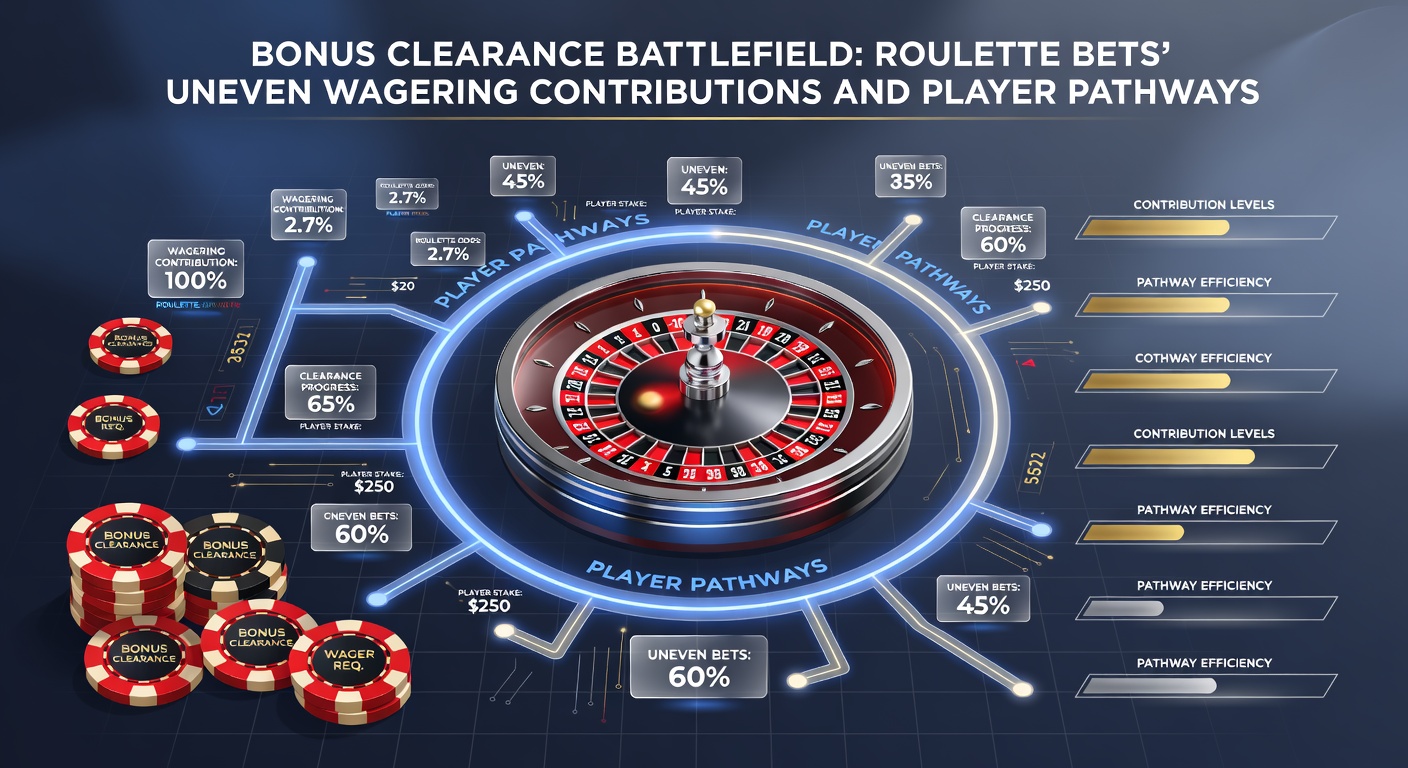
Turns out, progressive staking fits some paths—starting low on even-moneys, scaling after wins—but volatility spikes if inside bets creep in; one case study from Australian researchers detailed a player clearing a 30x bonus in 250 spins by sticking to columns, banking 33% more efficiency than mixed betting. So while April 2026 sees operators tweaking terms amid regulatory scrutiny, these pathways remain timeless for roulette enthusiasts.
Observers note that demo modes help test these routes risk-free, mimicking bonus conditions before real stakes hit the table.
Navigating Variations Across Casino Types and Regions
Casino software providers like Evolution and Playtech standardize some contributions, but regional flavors differ; in Canada, for example, reports from the Alcohol and Gaming Commission of Ontario show even-money bets dominating bonus play at 100%, while U.S.-facing sites under Nevada oversight often slash inside bets to 5% amid stricter player protections. European hubs push higher thresholds on straights to balance promotions, and mobile apps in April 2026 amplify this with lightning variants where multipliers don't always boost contributions.
But here's where it gets interesting: live dealer roulette, surging in popularity, mirrors land-based terms closely, with croupiers calling bets that count fully only if low-risk—voisins du zero or tiers? Often 33% at best, per industry benchmarks. Players who've charted these find hybrid paths work best, like 70% even-money volume paired with 30% dozens for subtle edge-hunting without derailing progress.
And low-stakes tables, now commonplace at £0.10 minimums, let bonus hunters stretch sessions; data reveals clearance times drop 25% on such wheels versus high-roller pits.
Risks, Pitfalls, and Data-Backed Avoidance Tactics
Variance bites hardest on uneven contributions—straight-up chasers see bankrolls swing wildly, with 90% failing to clear per simulations—while even-money grinders face the grind's monotony, yet stats show 65% success rates over 500 spins. Common traps include ignoring max bet rules (often £5 per even-money line during bonuses) or game exclusions; some sites void progress on American wheels entirely.
Research from gaming labs underscores time limits too—30-day windows force paced play—and that's where trackers shine, apps logging contributions spin-by-spin. One study found players using such tools cleared 40% faster, dodging overbets that trigger forfeits.
Yet the writing's on the wall: always scan terms pre-deposit, since contributions shift with promotions; April 2026's seasonal bonuses, tied to spring events, reportedly eased dozens to 100% in select EU sites, opening fresh pathways.
Conclusion
Roulette's bonus battlefield rewards those who decode uneven bet contributions, channeling even-money reliability and strategic blends into clear player pathways that minimize risk while fulfilling requirements. Figures consistently show low-volatility routes triumph, from flat even-bets to hybrid dozen plays, across live, mobile, and regional variants. As April 2026 unfolds with evolving promotions and tech like enhanced trackers, the core lesson holds: knowledge of these tiers turns bonus hunts into winnable spins, backed by data from global regulators and analysts alike. Players equipped with this map navigate smarter, spotting opportunities where others see only obstacles.