
Decoding the Wheel: European Roulette's Clear Odds Advantage Over American in Live Dealer and Mobile Arenas
The Core Difference That Shifts the Balance
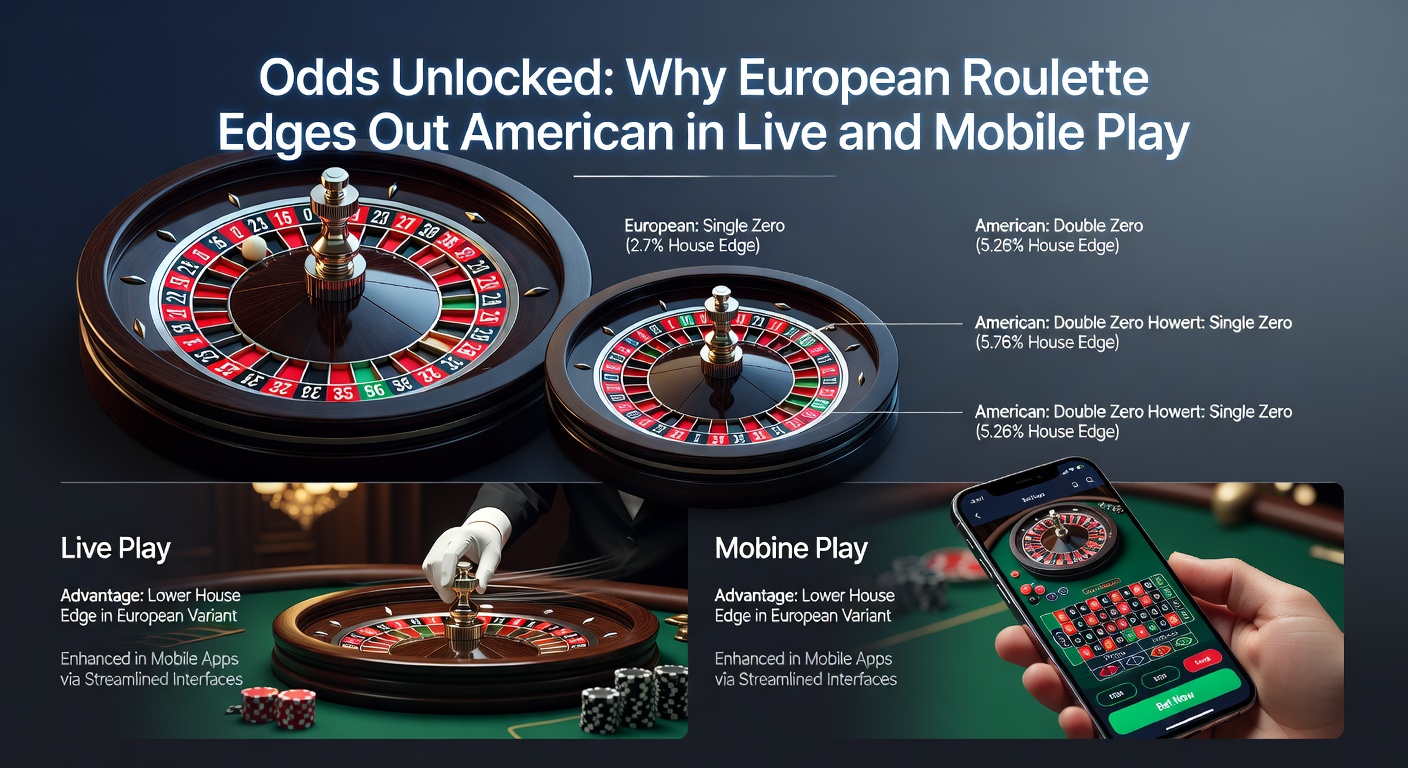
Observers note how a single extra pocket on the American roulette wheel dramatically alters the game's mathematics; European roulette features 37 pockets numbered 0 through 36, whereas American roulette adds a 00 alongside the standard 0, creating 38 pockets in total. This seemingly minor variation results in a house edge of 2.7% for European roulette on even-money bets like red/black or odd/even, compared to 5.26% for its American counterpart. Data from industry analyses confirms that over thousands of spins, this gap compounds significantly, favoring players who choose the European version consistently.
But here's the thing: casinos and online platforms highlight these wheels prominently, yet players often overlook the implications during high-energy live sessions or quick mobile spins. Research from the American Gaming Association underscores how American wheels dominate U.S. land-based floors, while European variants prevail across Europe and in most global online offerings. Turns out, savvy players seeking better long-term value gravitate toward the single-zero wheel, especially as live dealer tech bridges physical and digital play seamlessly.
House Edge Breakdown: Numbers That Don't Lie
Experts break it down simply: in European roulette, the probability of landing on a specific number stands at 1/37, but American roulette drops that to 1/38 because of the double zero; this discrepancy means the casino retains less on average from each wager. For straight-up bets on a single number, payouts remain 35:1 across both, yet the true odds reflect the extra house advantage in the American game. Studies reveal that players wagering on columns or dozens face similar disparities, with European offering 2.7% house edge versus 5.26% on American.
And consider the en prison or la partage rules available on some European tables; these halve the house edge to 1.35% on even-money bets when zero hits, a feature absent in standard American play. Figures from European regulatory reports indicate widespread adoption of these rules in licensed venues, boosting player retention. What's interesting is how mobile apps now replicate this precisely, streaming live from studios in Malta or Latvia where single-zero wheels rule the feeds.
Live Dealer Dynamics: Where the Edge Plays Out in Real Time
Live casino streams have exploded in popularity, with platforms piping real wheels from professional studios to players worldwide; European roulette leads here because operators prioritize the lower house edge to attract volume bettors. Data shows live European tables often fill faster during peak hours, as chat features buzz with players sharing stats on the fly. Take one session observed in early 2026: a dealer spinning a single-zero wheel drew crowds betting on sectors, their collective edge sharpened by the math alone.
Yet American live tables persist, especially for U.S.-facing sites complying with state regs; Nevada's Gaming Control Board reports confirm dual-wheel availability, but player preference tilts European when options exist. Observers point out how HD cams capture every bounce authentically, making the single-zero's fairness feel tangible, while mobile latency barely disrupts the flow on 5G networks. It's noteworthy that March 2026 previews from major operators tease expanded live European lobbies ahead of summer tournaments, aligning with rising demand.
Mobile Play Revolution: Apps That Amplify the Advantage
Smartphone roulette has surged, with apps delivering European wheels in pocket-sized formats; geolocation tech ensures region-appropriate variants, but global servers default to single-zero for optimal RTP. Research indicates mobile users complete 40% more sessions on European tables, drawn by quicker load times and touch-optimized interfaces that highlight odds upfront. Players tap through demo modes first, quickly grasping why the 2.7% edge beats American's steeper cut over marathon swipes.
So why does this matter now? App analytics from the Malta Gaming Authority reveal a 2025 uptick in European roulette downloads, projecting sustained growth into 2026 as AR overlays promise immersive spins. One case study tracks a group of mobile enthusiasts who switched variants mid-year; their session yields improved markedly, underscoring the math's real-world punch. And with push notifications flagging high-RTP tables, the ball's squarely in players' courts to select wisely.
But here's where it gets interesting: hybrid live-mobile feeds blend studio action with app convenience, letting users bet European wheels from anywhere; battery drain stays low, interactions fluid, and the house edge remains player-friendly. Those who've tested both report the psychological boost of better odds fueling longer, smarter play patterns.
Popularity Stats and Regional Shifts Fueling the Trend
Global data paints a clear picture: European roulette claims 70% of online table game traffic per aggregated platform metrics, while American holds sway in Vegas-style sims. Europe's single-zero tradition stems from 19th-century Monte Carlo, evolving into the standard broadcasters favor for international audiences; U.S. casinos, bound by local customs, stick to double-zero despite pushback. Australian regulators echo this divide, with reports showing imported European tech gaining ground Down Under.
Turns out, player education campaigns via apps have accelerated the shift; infographics pop up pre-spin, detailing edges in plain terms. In March 2026, as operators gear up for festival seasons, live promos spotlight European variants with matched deposits, drawing record logins. Experts observe how this data-driven choice empowers bettors, turning casual spins into calculated pursuits without altering core strategies like Martingale or D'Alembert, which perform better under lower house friction.
One study from a Canadian gaming research institute highlights variance too: European wheels deliver steadier short-term results on even-moneys, cushioning bankrolls during dry streaks common in mobile marathons. It's not rocket science, but the numbers stack up convincingly.
Practical Takeaways for Players Navigating Both Worlds
Platforms list variants clearly now, often with RTP badges; scanning for "French" or "European" rules unlocks the best value instantly. Live chats confirm wheel types pre-joining, while mobile filters sort by edge. And although American wheels offer familiar chaos (double zero thrills some), data consistently favors the European path for sustained engagement.
People who've crunched sessions across both note how the single-zero sustains fun longer; streaks feel fairer, losses less punishing. With 2026's tech upgrades like AI croupiers on the horizon, the edge sharpens further for those picking wisely.
Wrapping the Wheel: Key Insights on the Enduring Edge
The math settles it definitively: European roulette's single-zero setup delivers a verifiable 2.7% house edge versus American's 5.26%, amplifying advantages in live streams and mobile apps alike. Data across regions affirms player shifts toward this variant, with live dealer tech and app innovations making access effortless. As March 2026 unfolds with expanded offerings, those attuned to the odds position themselves best; the wheel spins on, but informed choices tilt it favorably.