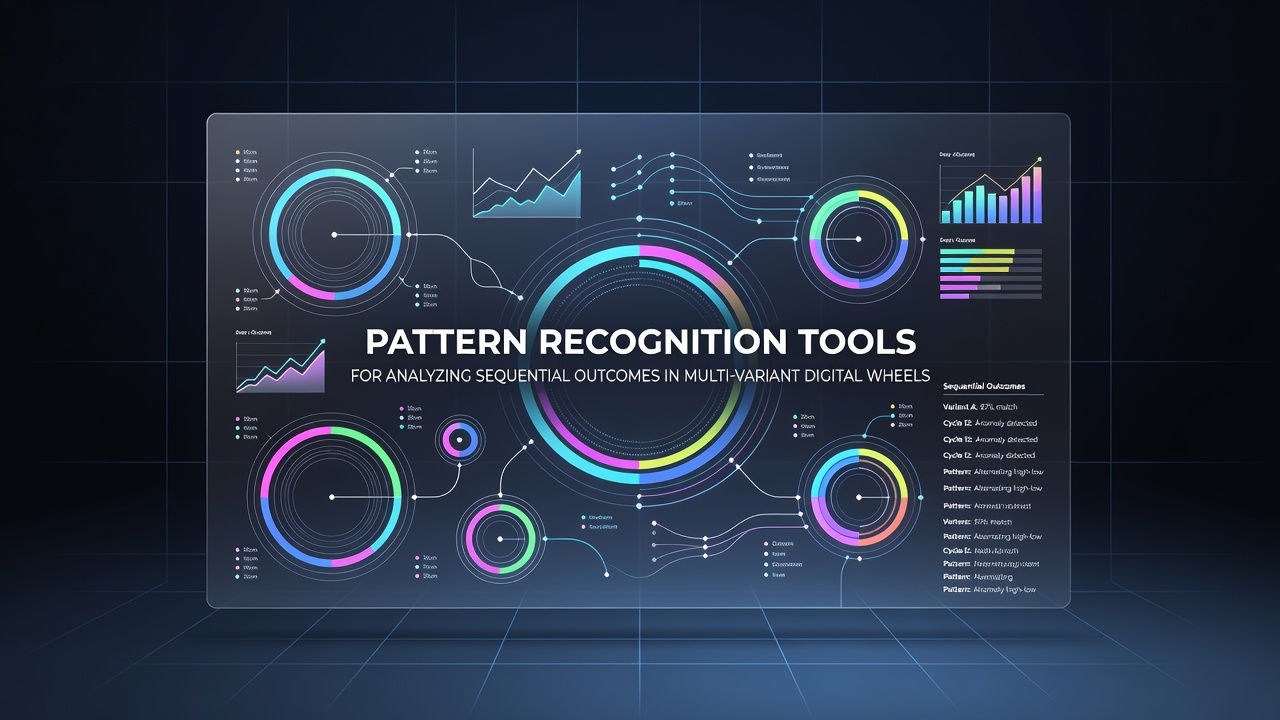
Digital Wheel Sequence Analysis: Emerging Pattern Recognition Tools in 2026
Pattern recognition tools have gained traction among analysts working with sequential outcomes generated by multi-variant digital wheels, and researchers continue to refine these systems as data volumes expand through 2026. These tools process streams of results from wheels that incorporate varying physical or algorithmic parameters, such as different segment counts, bias factors, and randomization seeds, while identifying recurring structures in the data flows.
Core Components of Pattern Recognition Systems
Developers build these platforms around statistical models that handle time-series data, and they integrate machine learning classifiers to categorize outcome clusters across wheel variants. Algorithms examine transition probabilities between consecutive spins, then flag deviations that exceed baseline thresholds established during calibration phases. Engineers test these models on synthetic datasets that replicate real-world wheel mechanics, which allows them to isolate variables like friction coefficients and angular velocity distributions before deployment in live environments.
Statistical Foundations and Algorithm Types
Hidden Markov models form one backbone for tracking state changes in sequential wheel data, while recurrent neural networks capture longer dependencies that span multiple variants. Analysts apply Fourier transforms to detect periodic signals embedded in the outcome streams, and they combine these with clustering techniques such as k-means or DBSCAN to group similar sequence motifs. Data from August 2026 testing rounds showed that hybrid approaches, which merge frequency-domain analysis with temporal convolution layers, reduced false positive rates by measurable margins compared with single-method baselines.
Validation protocols require cross-validation across independent wheel configurations to ensure the tools generalize beyond the training distribution. Teams document performance using metrics that include precision, recall, and F1 scores derived from labeled sequence segments, and they publish these results in technical reports that detail parameter sensitivity.
Implementation Across Variant Wheel Platforms
Operators deploy pattern recognition pipelines on cloud infrastructure that ingests real-time feeds from digital wheel simulators operating under distinct regulatory frameworks. One deployment in North America connects to servers running wheels with 38 segments, whereas European installations process 37-segment variants alongside custom RNG modules. The systems normalize input formats before feeding data into shared analysis engines, which preserves compatibility while accommodating regional differences in wheel construction standards.
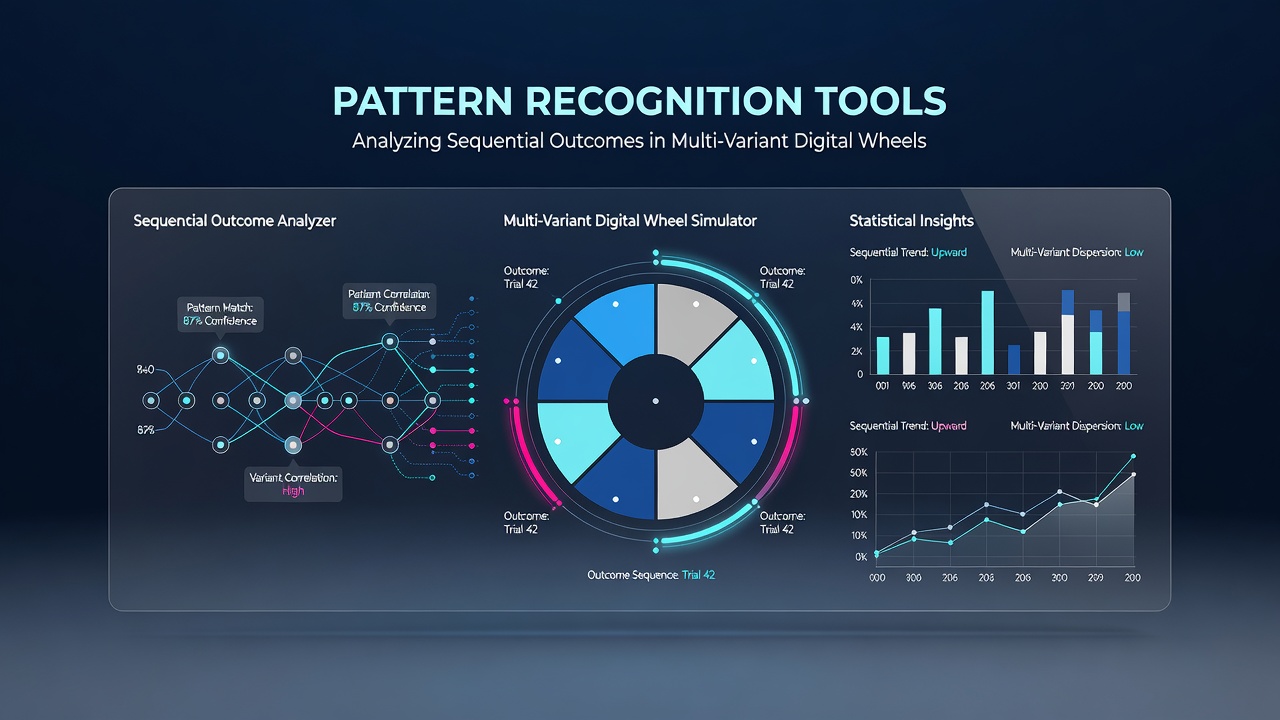
Integration points include API endpoints that export processed pattern summaries to compliance dashboards, and these endpoints support queries filtered by date ranges or specific variant identifiers. Engineers monitor latency during high-volume periods to maintain synchronization between wheel output streams and analysis modules, which prevents backlog accumulation when multiple wheels run concurrently.
Data Sources and External Validation
Research teams draw reference datasets from public repositories maintained by organizations such as the National Institute of Standards and Technology, which supplies standardized randomness test suites applicable to wheel simulation outputs. Additional benchmarks come from academic consortia in Australia that publish comparative studies on sequence detection methods across simulated mechanical systems. These sources supply ground-truth labels for training phases and enable independent audits of detection accuracy.
Case studies illustrate how one research group applied convolutional sequence models to isolate bias signatures in wheels that differed only in their internal seed rotation schedules. The analysis revealed consistent transition anomalies that persisted across 50,000 recorded outcomes, prompting recalibration of the underlying generators. Observers note that such findings emerge only when tools accommodate the full range of variant parameters rather than treating each wheel in isolation.
Challenges in Scaling and Accuracy
Noise from network jitter and variable sampling rates can obscure subtle patterns, so preprocessing stages incorporate smoothing filters and gap-filling routines. Variant-specific drift, where wheel parameters shift gradually due to software updates, requires continuous retraining schedules that adapt model weights without overwriting prior knowledge. Teams address this through incremental learning frameworks that retain performance across evolving wheel configurations.
Computational overhead grows with the number of tracked variants, which leads developers to explore edge-computing placements that perform initial feature extraction closer to the data source. This architecture reduces central server load while preserving the granularity needed for downstream classification tasks.
Conclusion
Pattern recognition tools continue to evolve as multi-variant digital wheels proliferate across simulation platforms, and their effectiveness depends on rigorous integration of statistical methods with adaptive machine learning components. Ongoing work in August 2026 focuses on refining cross-variant generalization and lowering computational barriers, which supports broader adoption in environments that demand precise sequence monitoring. Data from established research bodies and technical evaluations provides the foundation for these developments, ensuring that reported performance metrics reflect measurable outcomes rather than unverified assumptions.