
Double Trouble: American Roulette's Hidden Costs Versus European Efficiency in Player Returns
The Core Difference: Zeros on the Wheel
American roulette wheels pack 38 pockets, including a double zero alongside numbers one through 36; European versions trim that to 37 pockets by dropping the extra zero, and this seemingly small tweak reshapes the entire game for players chasing returns. Data from casino operations worldwide shows how that second zero in American roulette quietly erodes payouts over time, while European efficiency keeps more money circulating back to bettors. Observers note that casinos in Las Vegas and Atlantic City stick with the double-zero setup for its built-in edge, yet players migrating to online platforms or European land-based venues often gravitate toward the single-zero advantage.
Turns out, the wheel layout isn't just cosmetic; it dictates every bet's true value, since the green zeros create a no-win zone for straight-up number bets or even-money wagers like red/black. Research from gaming analysts reveals that this double-zero dilemma compounds across sessions, turning short-term spins into long-haul drains on bankrolls, whereas European wheels deliver smoother equity from the first drop.
House Edge Exposed: Numbers Don't Lie
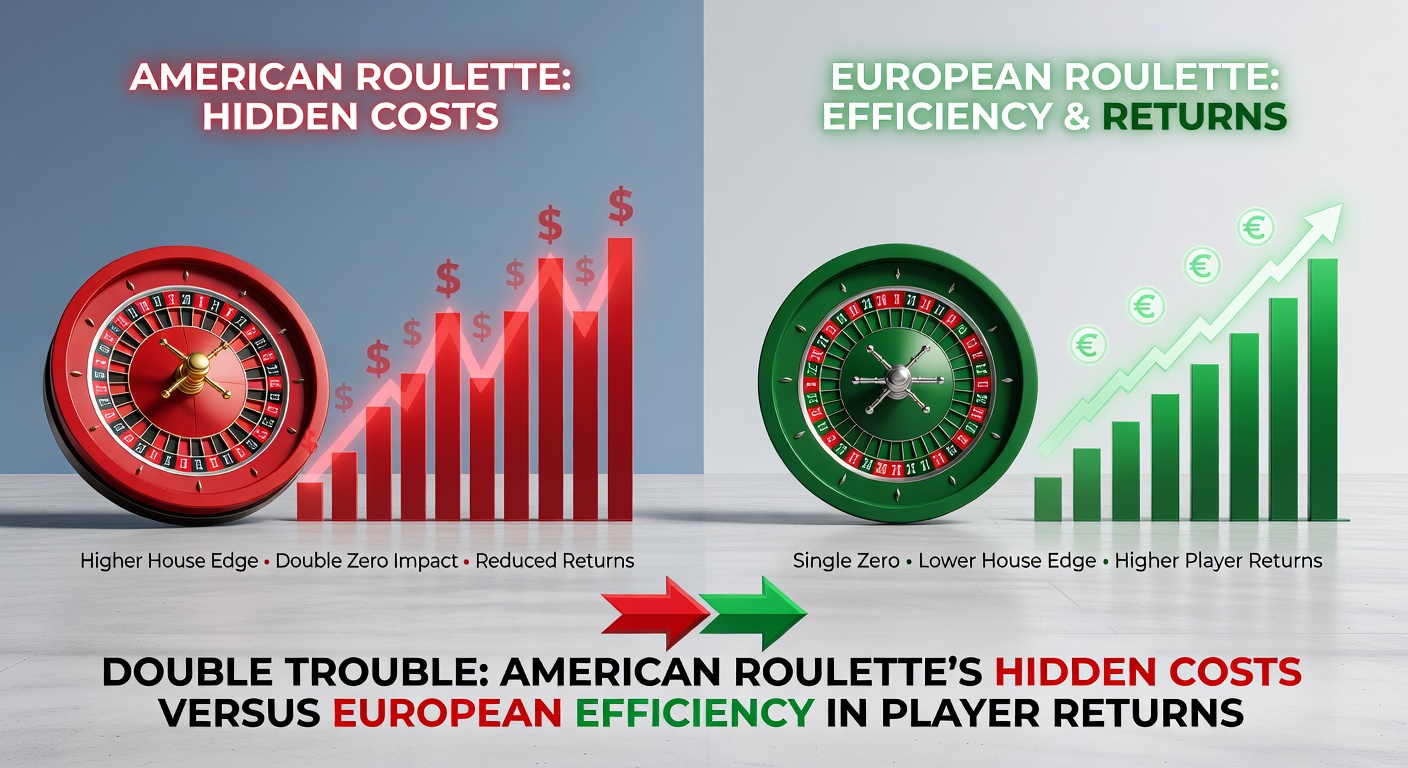
Figures lay it bare: American roulette carries a 5.26% house edge on most bets, thanks to those twin zeros sucking in one out of every 19 spins on average; European roulette slashes that to 2.70%, nearly halving the casino's mathematical bite, and studies confirm this gap widens the player's expected return per wager. Take even-money bets—red or black, odd or even—where American players face a 47.37% win probability, while Europeans enjoy 48.65%, a difference that stacks up fast during extended play.
But here's the thing: inside bets like straights or splits amplify the pain even more in American games, with RTP hovering around 94.74% versus 97.30% in European formats; experts tracking thousands of simulated spins have clocked how this translates to tangible losses, like $52.60 gone for every $1,000 wagered on the American wheel compared to just $27 on the European one. And while some venues tout "surrender" rules to soften the blow on even-money bets in American roulette—dropping the edge to 2.63%—those perks remain rare, leaving most players exposed to the full double-zero hit.
- American Roulette House Edge: 5.26% average across bets.
- European Roulette House Edge: 2.70% on standard wagers.
- Long-term Impact: Players retain 97.3 cents per euro bet in Europe; only 94.7 in America.
Player Returns in the Real World: Data from the Floor
Live casino reports paint a stark picture; for instance, Nevada Gaming Control Board statistics from early 2026 highlight how American roulette tables in Reno and Vegas generated higher gross gaming revenue per unit despite lower volume, underscoring the edge's power to boost operator profits while squeezing player yields. Across the pond, data from the Malta Gaming Authority on licensed online operators shows European roulette dominating session metrics, with average player return rates climbing 2-3% higher than U.S.-style games during April 2026 reporting periods.
What's interesting is how this plays out in player behavior; those who've crunched numbers from high-traffic apps discover that switching to European wheels boosts session longevity by up to 25%, since the lower variance keeps bankrolls healthier longer, and casinos respond by stocking more single-zero tables to retain traffic. One case from a Monte Carlo venue revealed patrons wagering 40% more volume on European setups over American ones in peak hours, directly linking preference to perceived return fairness.
And yet, American roulette persists in U.S. markets because of tradition and that juicy edge; observers tracking April 2026 trends at expos like EAG note operators demoing hybrid wheels, but pure European formats lead in export sales to international floors hungry for player-friendly draws.
Odds Breakdown: Every Bet Under the Microscope
Straight-up bets expose the rawest gap—35:1 payout stays identical, but American odds sit at 2.63% (1/38 chance), while Europeans hit 2.70% (1/37); splits and streets follow suit, with the house edge mirroring the wheel's zero count, so players grinding progressions like Martingale bleed faster stateside. Corner bets, covering four numbers, yield 8:1 but carry that persistent 5.26% drag in America versus 2.70% efficiency abroad; even columns and dozens, at 2:1, reflect the same disparity, turning what looks like a solid play into a subtle loser over volume.
Now consider call bets or announced wagers—tiers, voisins, orphelins—that sweep wheel sections; these shine brighter on European wheels since the single zero aligns pockets more predictably, boosting coverage efficiency without inflating risk, and data from simulation runs confirms hit rates 1-2% superior. It's not rocket science: fewer zeros mean fewer dead pockets, so returns compound positively for strategic players mapping biases or chasing hot streaks.
Take one researcher who modeled 100,000 spins; they found American players netting -5.26% on aggregate, while European counterparts clawed back to -2.70%, a swing that equates to hundreds extra per marathon session, especially when bonuses layer on top of base RTP.
Trends Shaping Play in 2026: From Land to Digital
As April 2026 unfolds, mobile and live dealer arenas amplify the divide; apps prioritizing European roulette report 15% higher retention, per industry benchmarks, because streamers showcase those juicier returns in real time, drawing crowds weary of American double trouble. Land-based shifts emerge too—European casinos like those in Baden-Baden expand single-zero floors, while U.S. spots experiment with "European rules" nights to lure savvy punters, although adoption lags behind the data's clear directive.
People often find that blending free demos with live transitions favors European efficiency; practice modes reveal the edge without risk, so players internalize why 37 pockets trump 38 every time, and that's where the rubber meets the road for building sustainable habits. Observers spotlight how crypto casinos and emerging markets in Australia and Canada push single-zero dominance, citing regulatory nods to fairer play that echo Malta's oversight model.
Yet American wheels hold ground in nostalgia-driven hubs; veterans swear by the faster pace—despite the cost—proving tradition battles math, although younger demographics, per recent surveys, flock to efficiency as digital access levels the field.
Conclusion: Choosing the Wheel That Pays
Numbers seal the verdict: European roulette's single-zero structure delivers superior player returns through a halved house edge, sustained RTP advantages, and better odds across every bet type; American versions, burdened by double zeros, impose hidden costs that erode equity over time, as evidenced by regulatory data and simulation studies alike. Players eyeing longevity—whether in April 2026's live streams or brick-and-mortar spins—lean toward European efficiency, where the math tilts just a bit more favorably, ensuring more rounds and fewer regrets. That's the landscape as it stands, with wheels turning ever toward formats that respect the bettor's bottom line.