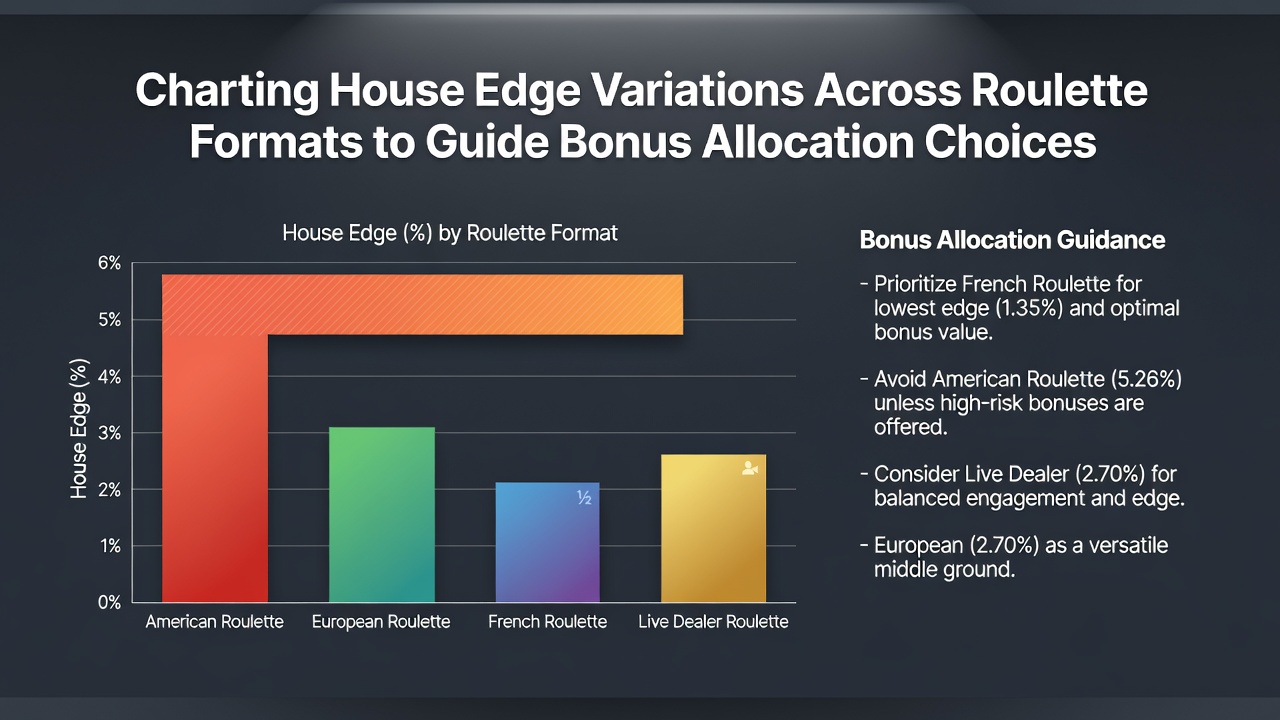
Examining House Edge Variations Across Roulette Formats to Inform Bonus Allocation
House edge calculations form the foundation for understanding how different roulette formats affect long-term player returns, and operators along with analysts track these differences to shape bonus distribution models. European roulette maintains a single zero, producing a house edge of 2.70 percent on standard bets, whereas American roulette incorporates both a single zero and a double zero, elevating the edge to 5.26 percent across most wagers.
Core Format Distinctions and Their Mathematical Foundations
Researchers at institutions such as the University of Nevada, Reno have documented how wheel configurations directly determine probability structures, and data compiled through August 2026 continues to confirm these baseline figures remain stable across regulated markets. French roulette applies the same single-zero layout as its European counterpart yet introduces La Partage and En Prison rules that reduce the house edge to 1.35 percent on even-money bets, a distinction that alters payout longevity during extended sessions.
Live dealer platforms and RNG-driven interfaces present identical mathematical cores, though synchronization delays in mobile environments occasionally shift perceived timing without modifying underlying probabilities. Observers note that bonus allocation strategies often prioritize formats where the house edge sits lower because those structures extend playtime before funds deplete.
Regional Data Patterns Emerging in 2026
Figures released by the Nevada Gaming Control Board in mid-2026 highlighted consistent player preference shifts toward single-zero variants in both online and land-based settings, while Australian regulatory reports from the same period revealed similar trends in licensed venues. Those patterns indicate operators adjust bonus structures according to documented edge differentials rather than promotional assumptions alone.
Applying Edge Data to Bonus Distribution Models
Bonus allocation decisions rely on matching promotional value to the expected duration of play within each format, and analysts cross-reference house edge percentages with average session lengths reported across platforms. When a bonus targets European or French variants, the lower edge allows funds to circulate longer, which in turn supports higher wagering requirements without rapid depletion. American roulette bonuses, by contrast, typically appear with adjusted contribution rates or shorter validity windows to offset the elevated 5.26 percent edge.
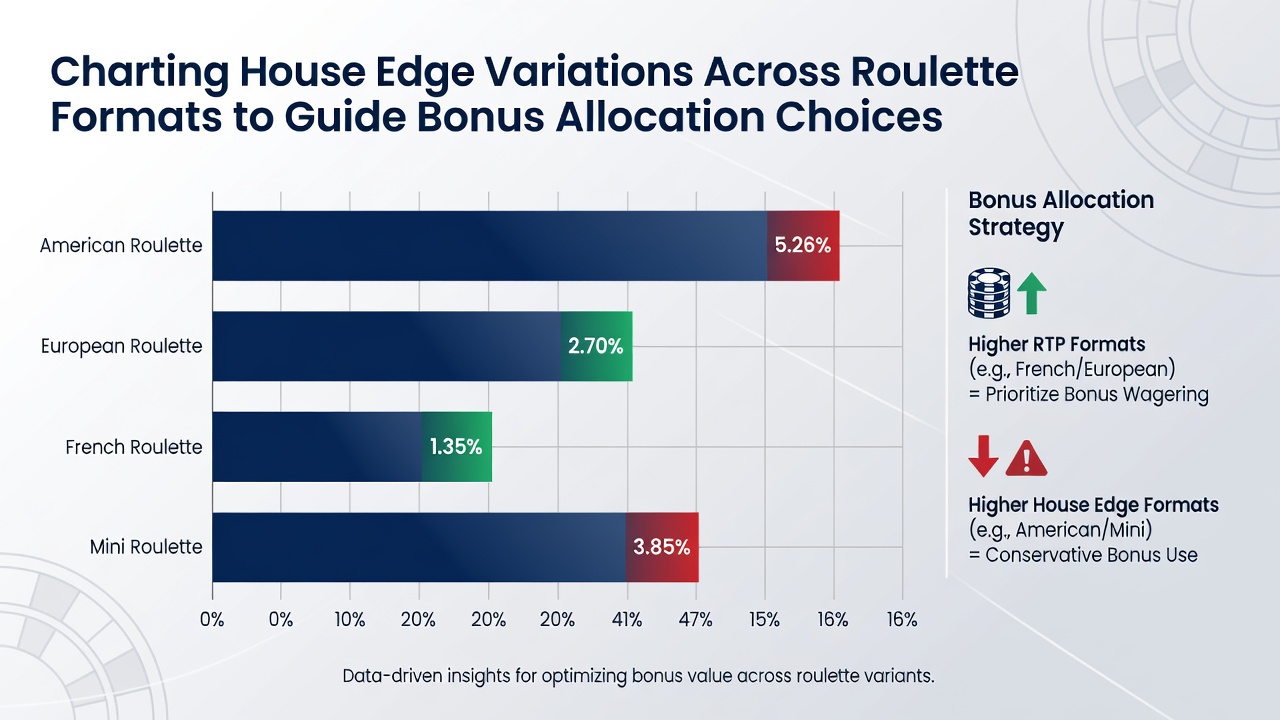
Industry reports from the European Gaming and Betting Association further illustrate how operators segment bonus pools according to variant-specific edges, allocating larger percentages to single-zero tables while scaling back offers on double-zero wheels. This segmentation appears in both desktop and mobile environments, where the same edge calculations apply regardless of interface.
Practical Examples from Regulated Markets
One documented case involved a Canadian provincial operator that restructured its welcome package after reviewing 2025-2026 performance data, directing a greater share of bonus funds toward French roulette tables equipped with La Partage rules. The adjustment aligned with observed retention metrics that showed extended play cycles on lower-edge formats. Similar recalibrations occurred among operators licensed in Malta, where regulatory filings reference edge differentials when approving promotional mechanics.
Call bet options such as voisins and tiers carry the same house edge as their underlying straight-up or split bets, yet they introduce additional complexity that some bonus terms address through specific contribution weighting. Observers tracking August 2026 compliance updates noted increased clarity in these weighting rules across multiple jurisdictions.
Conclusion
House edge variations across roulette formats supply measurable inputs that operators and analysts use when structuring bonus allocation frameworks. European, American, and French configurations each carry distinct probabilities that remain constant regardless of delivery method, and data gathered through 2026 continues to guide how promotional resources distribute across those variants. Regulatory bodies outside the United Kingdom, including the Nevada Gaming Control Board and the European Gaming and Betting Association, publish statistics that support these allocation models without altering the core mathematics of the game itself.