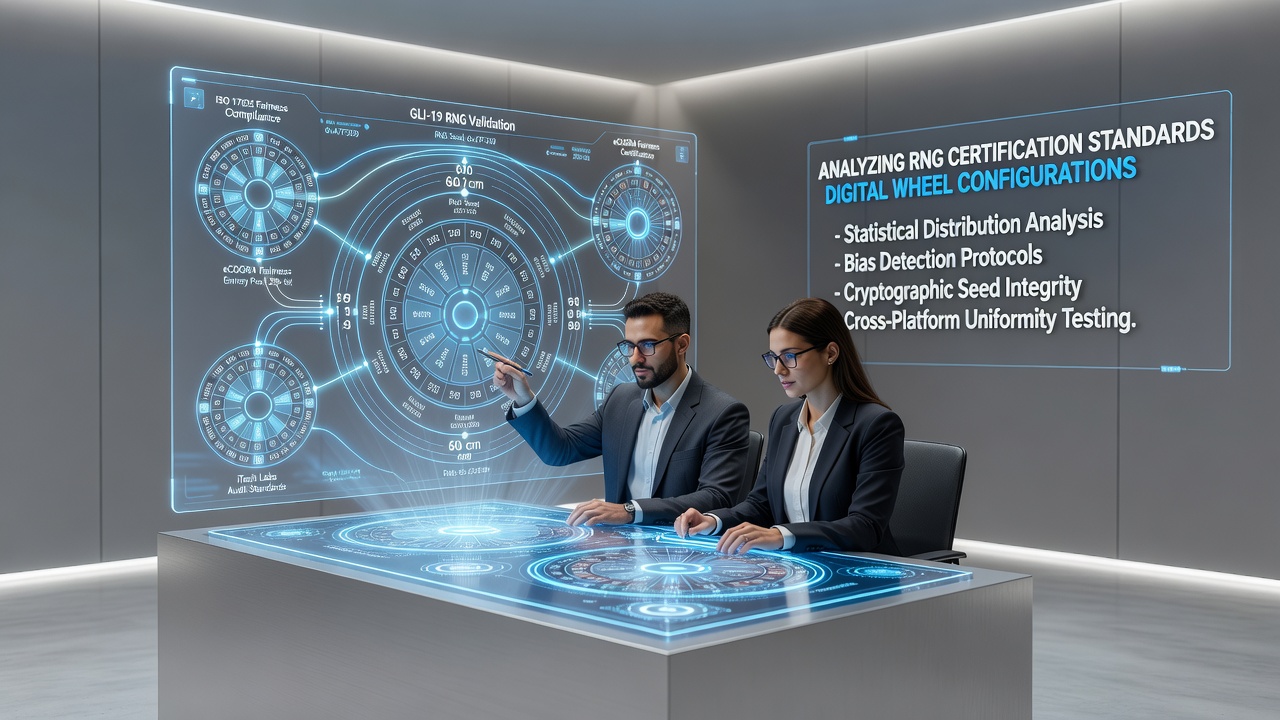
Global Standards for RNG Certification in Digital Roulette Wheel Variants
Certification processes for random number generators in digital wheel systems have evolved to address varying wheel configurations used in online gaming platforms, and regulatory bodies across regions maintain distinct protocols that testers apply during evaluation cycles. Observers note that these standards focus on statistical randomness, predictability resistance, and hardware-software integration points where digital representations of physical wheels operate.
Core Components of RNG Evaluation Protocols
Testing laboratories examine RNG outputs against mathematical models that simulate wheel segment distributions, and they verify that sequences meet uniformity criteria across thousands of iterations while accounting for configuration differences such as single-zero versus double-zero layouts. Data from certification reports shows that single-zero European-style wheels require tighter tolerance bands on number frequency because fewer segments exist compared with American variants, yet the underlying RNG algorithms must still produce independent results regardless of visual mapping.
Engineers run suites including Diehard, NIST, and custom wheel-specific tests that measure correlation between consecutive spins and detect any bias introduced by pseudo-random seed generation methods. Certification bodies document these procedures so operators can demonstrate compliance when deploying across multiple jurisdictions.
Regional Variations in Certification Requirements
Standards differ notably between North American and European frameworks, where the Nevada Gaming Control Board requires continuous monitoring logs that capture seed values and output streams for audit purposes, whereas Malta-based authorities emphasize third-party re-testing at fixed intervals after initial approval. In July 2026, several certification labs updated their checklists to include stress testing under simulated high-latency network conditions that affect real-time wheel rendering on mobile devices.
Australian regulators apply additional scrutiny to live dealer hybrids where physical wheels interface with digital RNG backups, and they mandate source code reviews that trace how configuration files translate RNG results into displayed outcomes. These layered approaches reflect the need to cover both fully simulated wheels and mixed environments without introducing exploitable patterns.
Impact of Wheel Configuration on Testing Parameters
Digital wheels configured for different betting formats demand adjusted statistical sample sizes during certification because multi-wheel layouts or rapid-spin modes generate higher volumes of data points per session. Testers adjust chi-square and runs tests accordingly to maintain equivalent confidence levels across setups, and they document how segment weighting algorithms interact with RNG entropy sources.
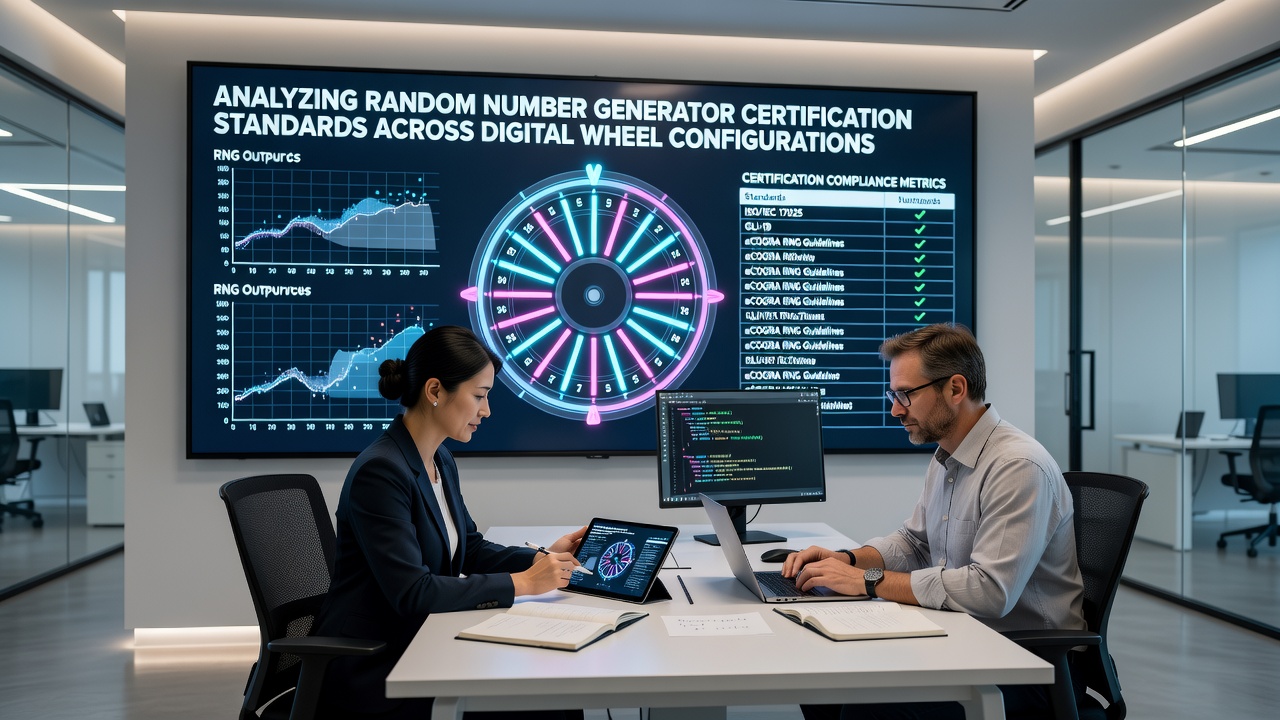
Research from the Gaming Laboratories International indicates that configurations supporting call-bet groupings require verification that RNG outputs align precisely with grouped segment probabilities rather than individual numbers alone. Failures in these alignments have prompted re-certification cycles in documented cases where visual wheel animations diverged from underlying random sequences.
Emerging Technical Benchmarks and July 2026 Updates
By July 2026, several testing standards incorporated requirements for quantum-resistant RNG seeding methods to future-proof systems against advances in computational attacks. Certification reports now reference entropy collection from multiple hardware sources including thermal noise and timing jitter, and they verify that failover mechanisms activate without introducing detectable periodicity.
Industry organizations such as the International Association of Gaming Regulators have published comparative matrices that map certification timelines and re-evaluation triggers across jurisdictions, enabling operators to plan deployments that satisfy overlapping requirements. These matrices highlight how configuration-specific parameters influence approval durations, particularly when wheels incorporate dynamic segment resizing features for promotional events.
Conclusion
Certification standards continue to adapt as digital wheel configurations diversify, and coordinated efforts among laboratories, regulators, and developers ensure that RNG integrity remains consistent regardless of visual or functional variations. Ongoing refinements address both current operational demands and anticipated technological shifts in gaming delivery systems.