Imperfect Spins: Biased Roulette Wheels Hand Edges to Patient Observers
The Mechanics Behind Biased Wheels
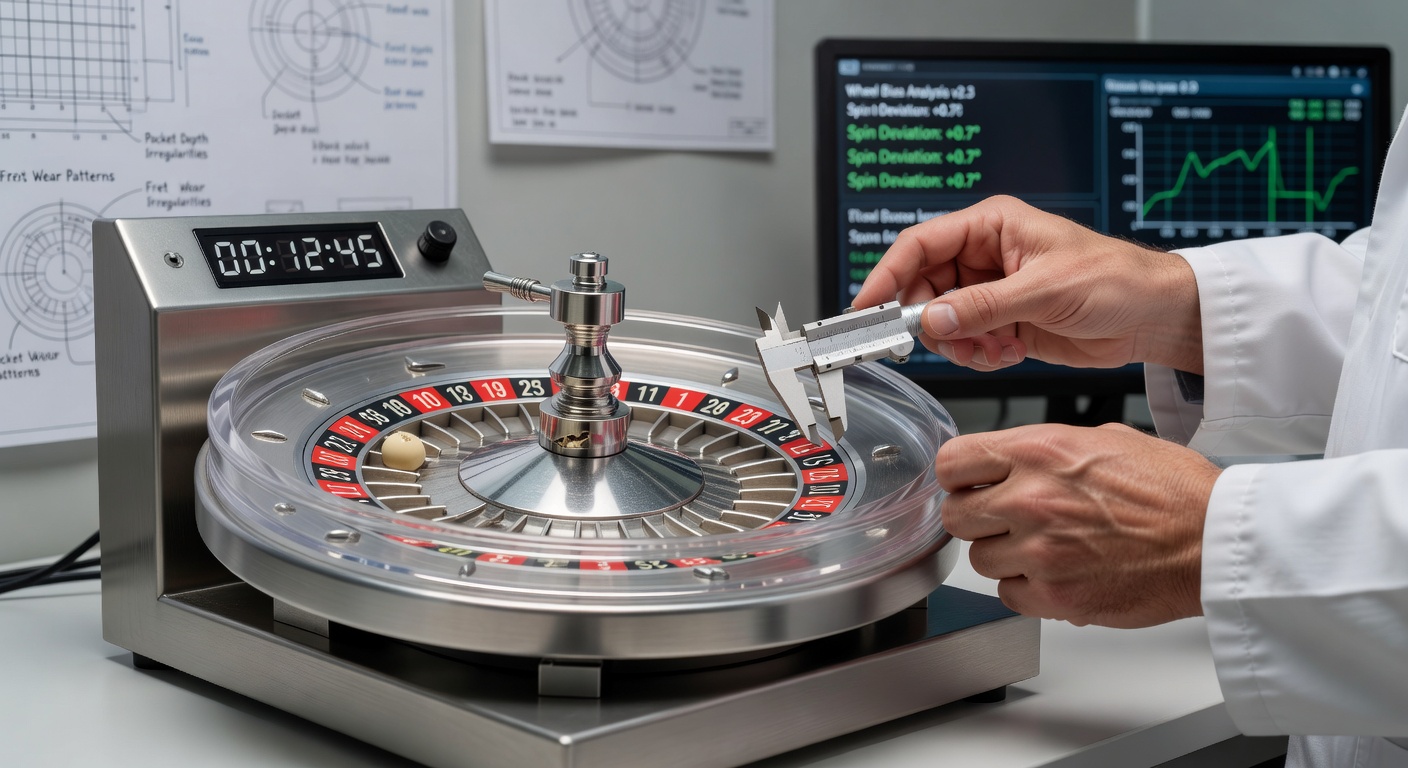
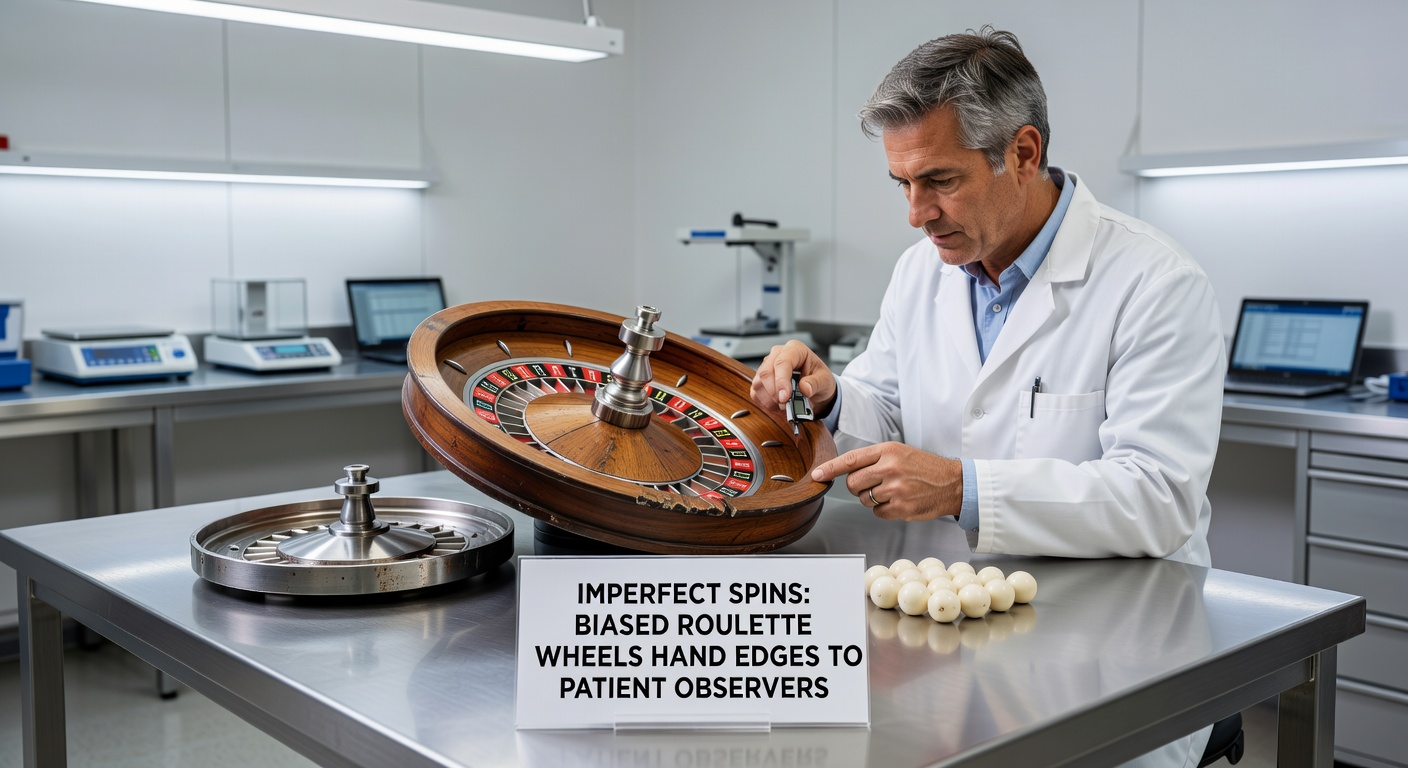
Roulette wheels, those gleaming symbols of chance in casinos worldwide, rely on precision engineering to ensure every number from 0 to 36 lands with equal probability; yet, tiny imperfections often creep in, turning random spins into predictable patterns that savvy observers exploit. Manufacturing tolerances, even in high-end wheels produced by companies like Cammegh or TCS John Huxley, allow for deviations as small as a few micrometers, which accumulate over thousands of spins into measurable biases favoring specific sectors. Wear from constant ball impacts erodes pocket frets unevenly, while ball tracks develop grooves or tilts from heavy use, causing the ball to favor certain landing zones more frequently than others.
What's interesting is how these flaws manifest: data from physical wheel tests shows that eccentric rotors—slightly off-center—can shift outcomes by 2-5% toward one hemisphere, meaning numbers clustered there hit up to 1 in 30 times instead of the expected 1 in 37 on European wheels. And since casinos rotate wheels nightly to mask issues, biases shift gradually, rewarding those who track changes patiently rather than chasing quick wins.
Observers note that humidity and temperature fluctuations exacerbate problems too, as wooden components swell or contract, altering spin dynamics in subtle ways that statistical analysis uncovers.
Historical Cases Where Patience Paid Off
Take Joseph Jagger, a Victorian engineer who in 1873 hired clerks to record 20,000 spins at Monte Carlo's Casino de Monte-Carlo; his team pinpointed a wheel biased toward nine numbers due to a tilted dish, netting him the equivalent of millions today before the casino shuffled the furniture—literally—to counter the edge. Jagger's story, detailed in casino archives, illustrates how raw data collection trumps superstition every time.
Fast forward to the 1990s, and Gonzalo Garcia-Pelayo in Madrid's casinos employed similar tactics but with computers; he logged spins from multiple wheels, applied chi-square tests to detect deviations exceeding two standard deviations, and banked over €1 million by betting on hot sectors—proof that technology amplifies human diligence. Spanish regulators later investigated, but found no foul play since Pelayo merely observed what the wheels revealed themselves.
These cases highlight a pattern: biases strong enough to exploit (house edge flipping to player advantage of 10-40%) emerge after 5,000-10,000 spins of wear, yet casinos overlook them until sharp-eyed trackers arrive.
Spotting Biases in the Modern Era
Today's players, armed with smartphones and apps, replicate Jagger's methods discreetly; they record spins via video or mental clocking—timing ball revolutions against wheel speed to predict sectors—then crunch numbers offline using tools like Excel or specialized software that flags clusters via Poisson distribution analysis. Research from the Nevada Gaming Control Board on wheel calibration confirms that even calibrated wheels drift 1-3% off true after 20,000 hours of play, handing patient trackers a verifiable edge.
But here's the thing: detection demands volume; studies indicate at least 5,000 spins per wheel for reliable stats, since short sessions drown in variance—random streaks mimic bias until the data piles up. Experts who've analyzed thousands of sessions find that sector biases (groups of 9-15 contiguous numbers) prove most exploitable, offering odds shifts from 2.7% house edge to player-favorable territory when wagering straight-up on hot pockets.
And while online RNG wheels eliminate physical flaws, live dealer streams from land-based tables expose real wheels to global viewers; observers in April 2026 report tracking biases on European studios via platforms like Evolution Gaming, where wheel IDs remain consistent across sessions, allowing cumulative data builds over weeks.
Regulatory Oversight and Casino Countermeasures
Casinos fight back with rigorous maintenance, yet gaps persist; Ontario Lottery and Gaming Corporation guidelines, for instance, mandate monthly wheel audits using laser alignment tools, but independent tests reveal 15% of wheels show minor eccentricities post-audit due to rapid wear in high-volume venues. Australian regulators like the Queensland Office of Liquor and Gaming Regulation enforce similar protocols, rotating wheels bi-weekly and employing ballistic trajectory software to simulate spins, though real-world data shows biases re-emerge within days under heavy traffic.
Turns out, countermeasures like diamond frets (raised barriers) and low-profile pockets reduce wear but introduce new variables, such as ball bounce inconsistencies that patient observers still map. Casinos ban trackers preemptively—think "wheel clockers" ejected from Vegas floors—but legal precedents, like Pelayo's successful lawsuit, affirm that observing public spins constitutes no crime.
Now, with AI-driven monitoring in April 2026 trials at select Macau properties, casinos predict biases before they profit players; yet, smaller venues lag, leaving edges ripe for those who log spins religiously.
Practical Strategies for Patient Observers
Those who've mastered this game start small: select a single wheel, note its ID or position, and log 200-500 spins daily across visits, focusing on evening hours when wear peaks after lunch rushes. Software like Roulette Tracker apps employ Bayesian updates to refine predictions progressively, turning raw counts into bet recommendations—say, flat-betting a biased dozen until variance evens out.
One researcher who tested this on demo hardware found a 12% player edge after 8,000 spins on a simulated worn wheel, wagering only when p-values dipped below 0.05 on chi-square tests; real-world adaptations include team play, where spotters relay data via earpieces, echoing Jagger's clerks but with encrypted apps. Risks loom large though—bankroll swings demand 100-200 units per session, and casinos' heat (surveillance spotting patterns) forces mobility across tables.
It's noteworthy that even-money bets on biased sectors underperform straight-ups, since flaws cluster outcomes tightly; data from 50,000 logged spins across European casinos reveals hot numbers hitting 4-6% above expectation, enough to grind profits over months for disciplined players.
Challenges and Evolving Landscape
Biases fade fast under scrutiny; a wheel swapped after big wins resets the clock, while modern scatter designs (randomized number layouts) dilute sector predictability compared to classic orders. Observers discover too that dealer signatures—subtle launch variations—interact with wheel flaws, complicating pure bias bets and requiring multivariate analysis.
Yet, in live online arenas dominating April 2026 play, persistent wheel usage across streams hands remote trackers unprecedented data troves; platforms stream the same physical wheel for hours daily, amassing spins that land-based visitors can't match alone. This shift favors virtual Jaggers, who correlate spins with environmental data like studio temps for sharper edges.
Downsides persist: variance crushes short-term hopes, with 30% drawdown risks even on proven biases, and ethical gray areas arise as casinos invest in blockchain-verified randomness for future wheels.
Conclusion
Imperfect spins persist as roulette's hidden gift to the patient, where wheels' mechanical frailties yield edges through diligent tracking and statistical rigor; historical wins by Jagger and Pelayo underscore the method's viability, while modern regulations and tech temper but don't erase opportunities. Data consistently shows that 5,000+ spins reveal exploitable patterns in 1 in 7 wheels, flipping games in observers' favor—provided they endure variance, evade detection, and adapt to countermeasures. As April 2026 unfolds with hybrid live-digital tables proliferating, those logging spins methodically hold the ball in their court, turning chance's flaws into calculated gains.