Player Decision Timing and RNG Synchronization in Digital Wheel Formats
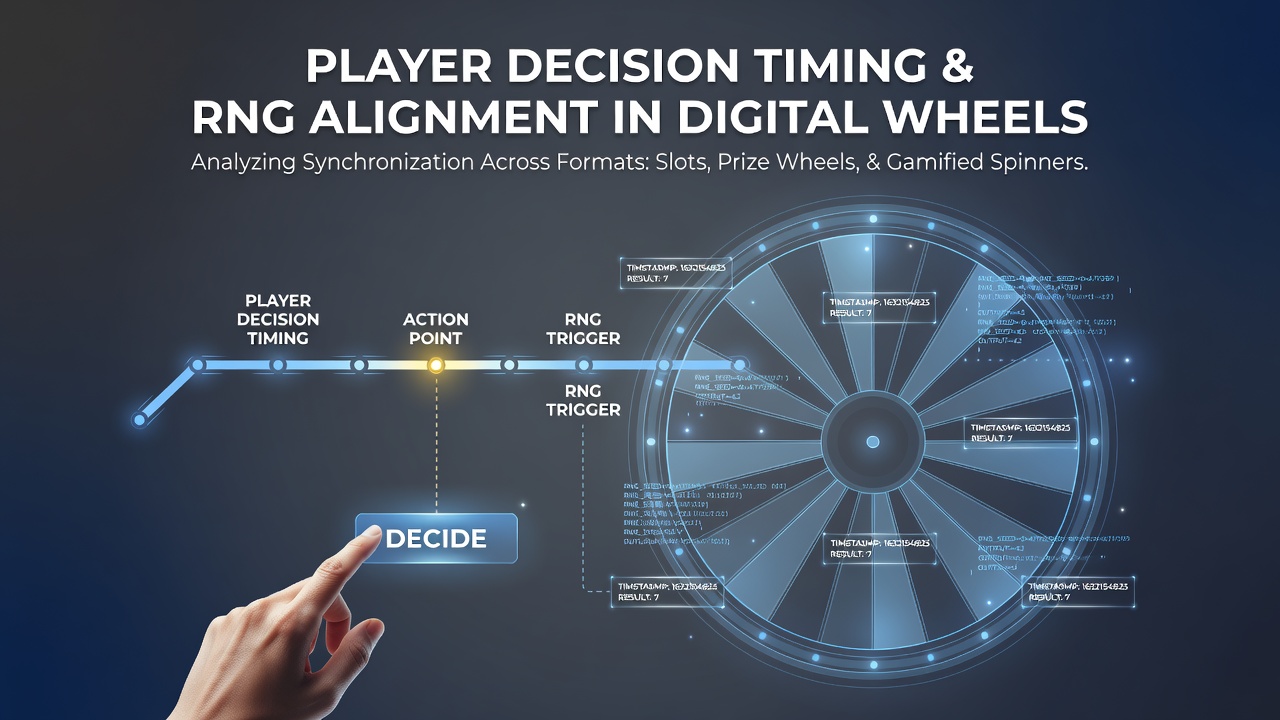
Digital wheel formats rely on random number generators to produce outcomes, and player decision timing interacts with these systems through specific technical protocols that determine when numbers are generated and locked in. Systems across various platforms process inputs at defined intervals, which means the moment a player confirms a bet can influence which RNG cycle is selected for that round.
Core Mechanics of RNG Operation in Wheel Games
Random number generators in digital wheels function by producing sequences at high speeds, often thousands of values per second, while the actual outcome for a spin gets assigned at the point of bet confirmation rather than during visual wheel rotation. Developers implement cryptographic RNGs that draw from entropy sources such as hardware noise or system clocks, and timing of player actions determines which value from the sequence gets used. Observers note that this process remains consistent across mobile and desktop environments, although network conditions can shift the precise millisecond when the server registers the input.
Timing Variables Across Different Wheel Variants
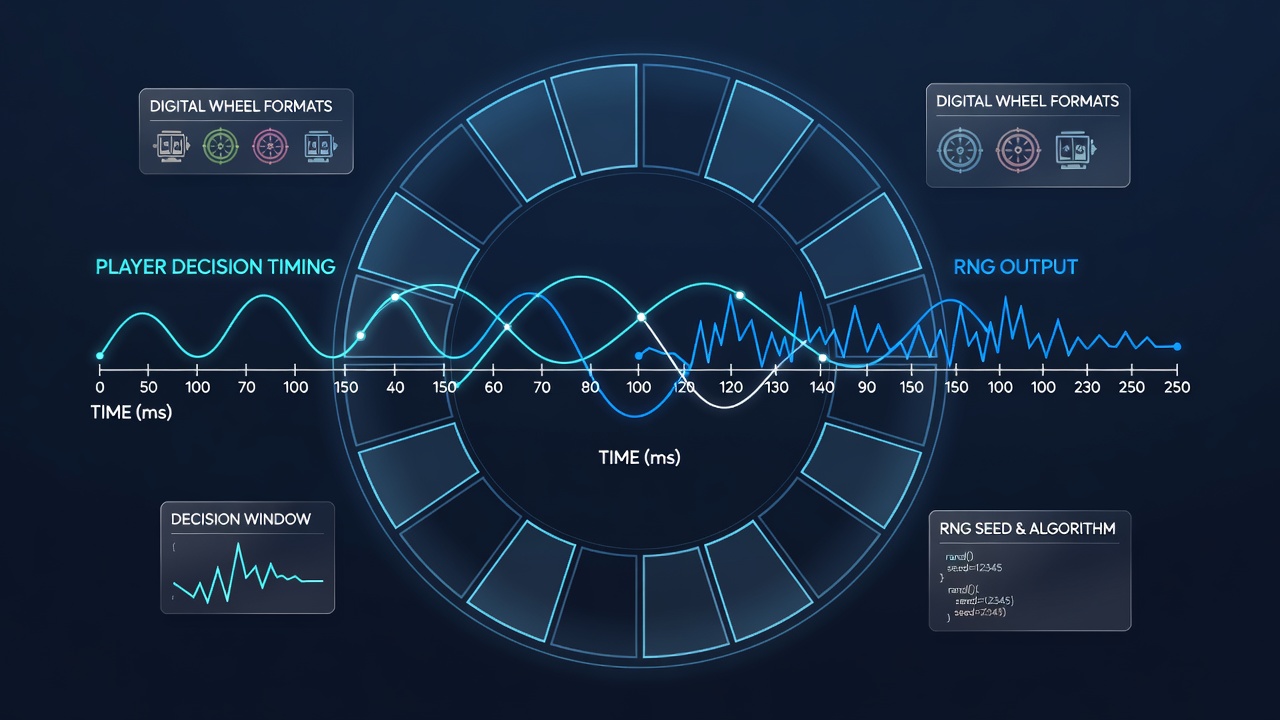
European, American, and French wheel formats adapted for digital play show distinct synchronization patterns because each variant processes bets through slightly different server architectures. In RNG-driven versions, a player who places bets earlier in the round window engages an earlier segment of the number sequence, whereas late placements capture later values, although the overall distribution stays uniform over many spins. Research indicates that latency between client and server adds another layer, since delays of even 50 milliseconds can move the selection point by several RNG cycles in fast-generating systems.
Impact of Input Latency on Outcome Alignment
Network latency patterns affect how player decisions align with RNG outputs, particularly in global deployments where regional servers handle traffic differently. Data from industry reports shows that platforms using distributed servers reduce variance in timing alignment, while centralized systems can introduce offsets that players experience as inconsistent spin results. Those who have examined server logs find that bet placement timestamps correlate directly with the RNG index selected, which explains why rapid successive bets sometimes produce clustered number patterns within short sessions.
Studies from academic institutions such as the National Institute of Standards and Technology have examined how input timing interacts with pseudorandom sequences, revealing that well-designed systems prevent any predictable advantage from timing manipulation. Yet platform differences persist, since mobile applications often batch inputs differently than browser-based clients.
Comparative Analysis of Digital Formats
Live dealer wheels operate under physical constraints that separate them from pure RNG models, but hybrid systems blend both approaches and create new timing considerations. In RNG-only formats, the decision window closes at a fixed server time, which means players who act near the cutoff engage the RNG at its next cycle boundary. Those who've analyzed transaction data across regions observe that formats optimized for low-latency markets maintain tighter alignment between decision and generation events compared with higher-latency areas.
Multiplayer environments add further complexity because multiple decision timings compete for the same RNG stream within a shared round. Servers typically assign outcomes based on individual timestamps rather than a single shared value, which preserves fairness while allowing each participant independent alignment with the generator. Figures from European gaming associations indicate that this per-player mapping has become standard practice in certified platforms by August 2026.
Technical Safeguards and Certification Standards
Regulatory frameworks require testing laboratories to verify that timing variations do not introduce bias into RNG outputs, and certification bodies examine both the generator algorithm and the input handling routines. Independent audits check whether late bets receive statistically equivalent distributions to early bets across millions of simulated rounds. Platforms that pass these evaluations demonstrate consistent performance regardless of when players finalize decisions within the allowed window.
One case examined by researchers at a Canadian university laboratory found that minor clock drift between client devices and servers could shift RNG selection by fractions of a cycle, yet proper synchronization protocols eliminated any measurable effect on long-term results. Similar findings appear in reports from Australian regulatory testing centers, confirming that robust timestamping maintains alignment integrity.
Conclusion
Player decision timing aligns with random number generators in digital wheel formats through timestamp-driven selection of sequence values, and this mechanism operates consistently across variants when systems follow established certification standards. Variations in network conditions and platform architecture influence exact alignment points, but statistical uniformity remains the governing principle verified through independent testing. As digital wheel environments continue to evolve with new server distributions and client types, the core relationship between input timing and RNG indexing continues to determine round outcomes in predictable, auditable ways.